
FHA loans and conventional loans remain the most popular financing type for today’s mortgage borrowers. Here’s how to determine which program makes the most financial sense for you…
FHA loans are insured by the Federal Housing Administration. The program contains two forms of mortgage insurance; an upfront mortgage insurance premium calculated at 1.75% of the loan amount a monthly premium based on based on .8% of the loan amount. These forms of mortgage insurance make the FHA pricey, however the program is very flexible. FHA allows:
- New mortgage post short sale or foreclosure is a three year wait time
- New mortgage post Chapter 7 bankruptcy is a three year waiting time
- Payment to income ratios as high as 55%
- Co signors are permitted
- Can finance up to 97% loan to value paying off a first and a second loan under rate and term avoiding ‘cash out’. ‘Cashing out’ is a lender term that refers to the structure of a mortgage where you’re receiving funds to pay off debt beyond what you owe. It is usually subject more restrictive guidelines, not the case with FHA.
- FHA loans contain very attractive interest rates as low as 3.25% on a 30 year fixed rate mortgage
When it makes sense: the program makes sense when you have little equity to work with or a unique financial situation. You’ll need at least a 3.5% down payment to purchase a home using an FHA Loan. The program will go as high as the maximum county loan limit in the area in which you are looking. For example in Sonoma County, California for a single-family home that means a loan size all the way to $554,300. If your credit score is anything under 680 an FHA loan generally is optimal.
Conventional Loans are loans bought and sold by Fannie Mae and Freddie Mac represent the lion’s share of the mortgage market. These loans while the most popular also contain tighter qualifying guidelines than FHA. Conventional loans include:
- Can use with no mortgage insurance with just 10% down
- New mortgage post short foreclosure is a seven year wait time, four year post short sale and 4 years post Chapter 7 bankruptcy
- Offer the lowest possible payments
When it makes sense: a credit score over 680 and a 5% down payment should the bare minimum to explore working with a conventional loan. Conventional loans also are stricter on the two-year same field history for employment and income and have a hard payment to income ratio requirement at a max of 45%.
Which loan program is most suitable for me?
If your credit score is 680 or higher
Then A conventional loan would make more sense
If your credit score is under 680
Then an FHA loan would be more appropriate
If you’re financial picture has story
Then your scenario could go either way especially if it has anything to do with divorce, or a previous credit derogatory credit event such as a foreclosure, then FHA would be the route.
If you have a big down payment
Then conventional is your vehicle
If you have a big down payment and a so-so credit score under 680
Then conventional could be a good vehicle, but your interest rate will be higher due to credit score.
If you don’t have a big down payment, but have a great credit score.
Then FHA primarily would be your vehicle, although a 5% conventional loan would be a solid choice as well.
The key is to understand the characteristics of both programs and how they relate to your financial picture. Right out of the gate you might be a good candidate for either program. Selecting the right loan is a function of choosing the one that is best in alignment with your payment and cash flow expectations.
Looking for a mortgage? Get a free quote today!
Share:
Posted in: FHA loans to buy a house, Low Rates, Santa Rosa mortgages, Sonoma County Mortgage Rates, buying your first home, conventional mortgages, how to buy sonoma county real estate, mortgage comparison shopping, mortgage rate quote, preapproval to buy a home, qualifying for a mortgage, sonoma county home buying, sonoma county refinancing
RELATED MORTGAGE ADVICE FROM SCOTT SHELDON
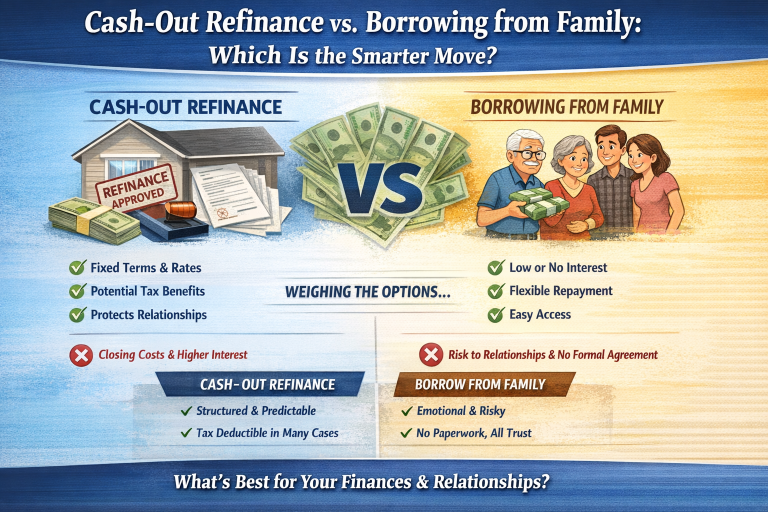
Cash-Out Refinance vs. Borrowing from Family: Which Is the Smarter Move?
You’ve built equity in your home. Maybe a lot of it. At the same time,…
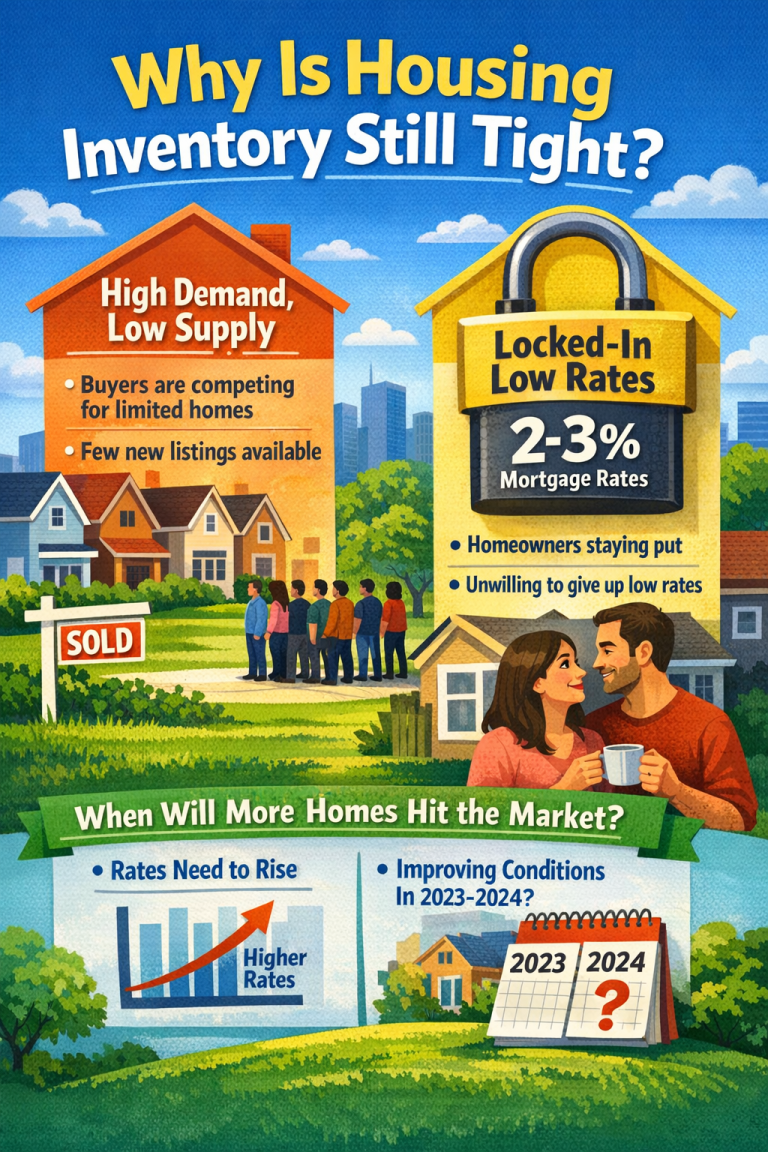
Why Housing Inventory Still Feels Tight—And What Interest Rates Have to Do With It
Let’s start with a simple but powerful scenario. A homeowner locked in a mortgage at…
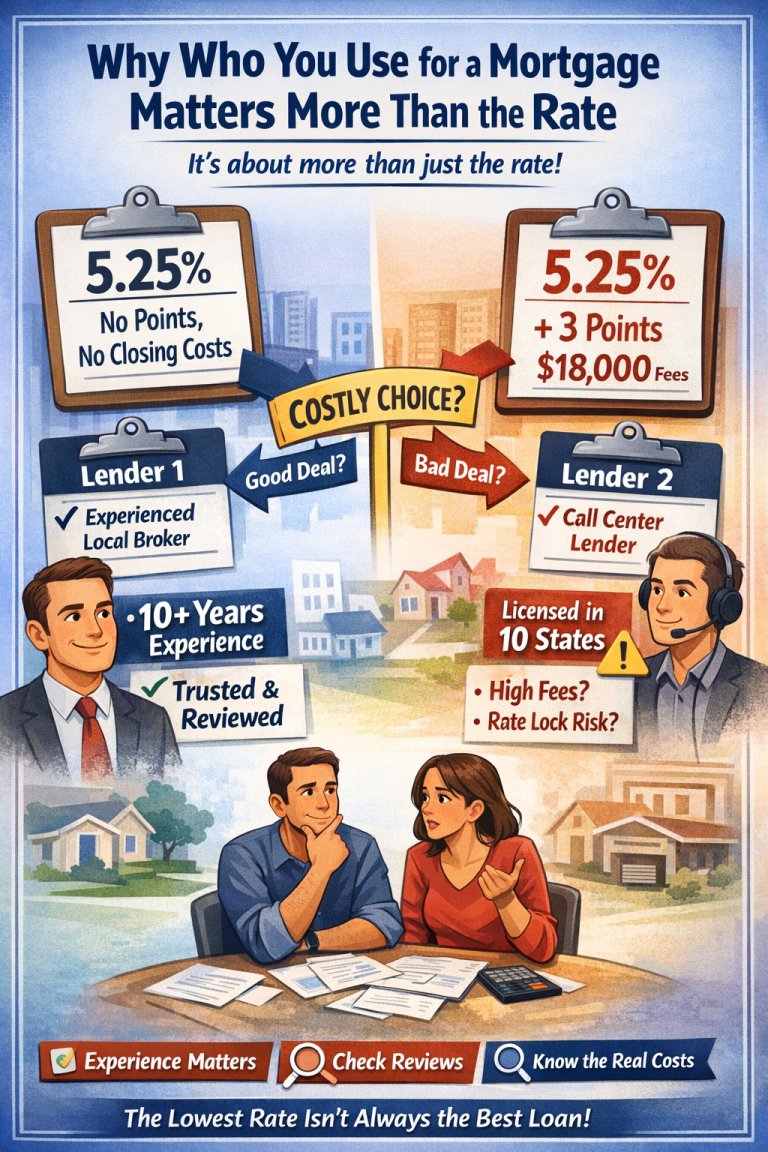
Why Who You Use for a Mortgage Matters More Than the Rate
Who you use for a mortgage loan matters. Let’s walk through a very real scenario…

On Hold or Just Unsure? Why You Wanted to Buy in the First Place
Every so often, someone gets pre-approved, looks at homes, runs numbers… and then says, “We’re…
View More from The Mortgage Files:
begin your mortgage journey with sonoma county mortgages
Let us make your mortgage experience easy. Trust our expertise to get you your best mortgage rate. Click below to start turning your home dreams into reality today!