
If you’re looking to get prequalified to buy a home, one of the main elements, a lender will use to determine your ability to afford that home is your income. Your gross monthly income from your W-2 wages or your net income from your tax returns is what the lender will use as a basis for granting you approval to borrow money.
So let’s say, for example, your income is $60,000 a year as an example in relation to house prices in the area which are desiring to purchase. Homes prices are 600k in your area. A $600,000 purchase price will mean you’ll probably need income somewhere around $100,000 a year maybe more, but for this example let’s say you’re about $40,000 short. $40,000 a year translates to $3333 a month more in income needed. This means in order to support this you’ll need to come up with more cash maybe you borrow on your 401(k) which a lot of first-time homebuyers even move-up buyers can do with little or no penalties whatsoever.
In fact, often times you can borrow on your 401(k) pretax. Another possibility is gift money from family or a close person in your life. You can even sell personal property to generate cash. So let’s say you can produce the cash you need to buy a $600,000 home. $3333 per month will allow you to fill the gap needed in monthly payment by $1666 per month $1666 per month is somewhere around $300,000 of purchasing power. Put another way if you didn’t have the extra cash you’re probably looking for a purchase price somewhere around 300,000 based on this illustration. You’re generally looking for a mortgage 3 to 5 times your monthly gross income in terms of purchasing power. So if your gross monthly income says $100,000 a year it’s reasonable that you might be able to buy about a $500,000 home. That is, of course, unless you can produce the cash to do it. Cash becomes the separator if your income is lower and you’re desiring to buy a home in an area in which housing prices are higher than the income you generate on a monthly basis.
Your other option is to get a cosigner. Cosigning essentially means someone else goes on the mortgage with you. However, that doesn’t make the payment necessarily lower. It just allows you to qualify for the loan because you’re using your income along with someone else’s income, blending the income and the financials together in order to qualify for a higher purchase price. Lenders are going to look at three main elements when it comes to getting home and they look at your credit score, down payment, and monthly income, and a good lender, a quality one will give you a pragmatic plan to identify where you are now and provide you a plan for you for the future for the long haul. You don’t want the lender who says hey “You don’t qualify I can’t help you”. Run from the lender like that and find one who is willing to collaborate with you on options.
Share:
RELATED MORTGAGE ADVICE FROM SCOTT SHELDON

Why Timing the Housing Market Doesn’t Work (And What Actually Does)
Let’s start with a simple idea: trying to perfectly time the housing market is not…
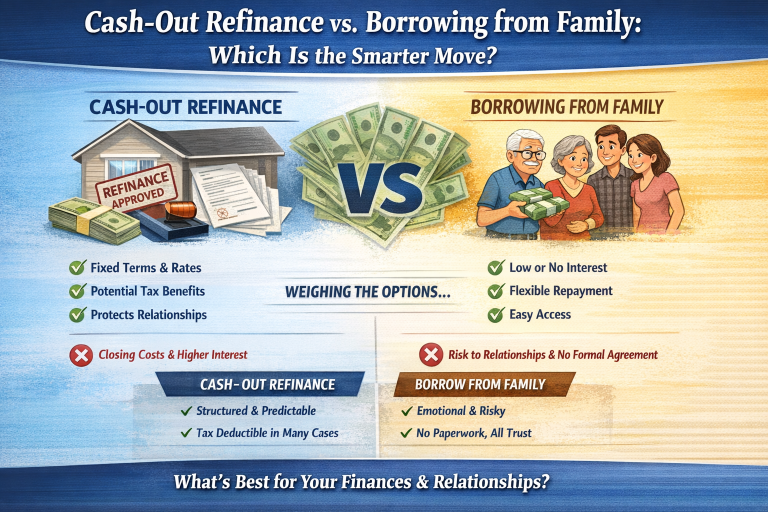
Cash-Out Refinance vs. Borrowing from Family: Which Is the Smarter Move?
You’ve built equity in your home. Maybe a lot of it. At the same time,…
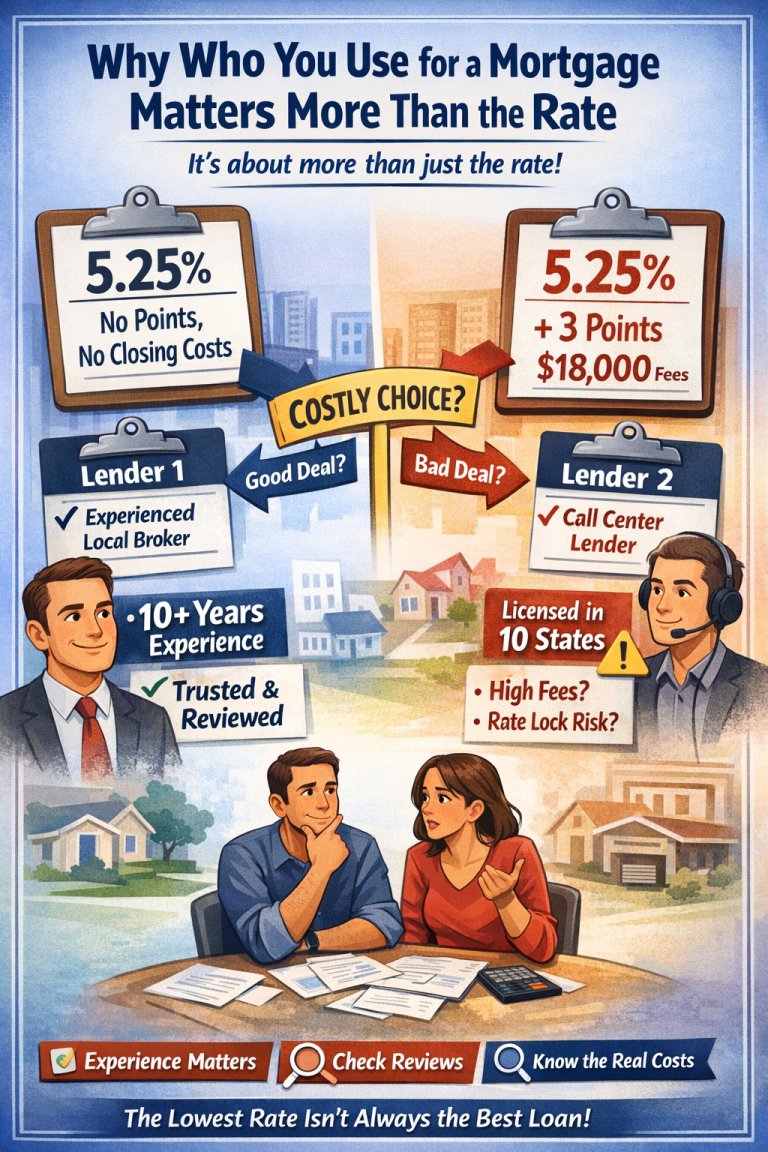
Why Who You Use for a Mortgage Matters More Than the Rate
Who you use for a mortgage loan matters. Let’s walk through a very real scenario…

On Hold or Just Unsure? Why You Wanted to Buy in the First Place
Every so often, someone gets pre-approved, looks at homes, runs numbers… and then says, “We’re…
View More from The Mortgage Files:
begin your mortgage journey with sonoma county mortgages
Let us make your mortgage experience easy. Trust our expertise to get you your best mortgage rate. Click below to start turning your home dreams into reality today!