
When mortgage rates fall, most people immediately assume buying a home becomes easier.
At first glance, that logic makes perfect sense.
Lower interest rates generally mean lower monthly payments. Lower monthly payments often increase purchasing power. More purchasing power should make housing more affordable.
However, that is only part of the story.
What many buyers fail to recognize is that lower mortgage rates often create a surge in demand. When demand increases faster than housing supply, home prices rise. In many cases, those higher home prices can require buyers to earn more income to qualify, even if interest rates are lower.
This relationship between interest rates, housing demand, and affordability is one of the most misunderstood concepts in real estate finance.
Understanding how these forces interact can help buyers make better decisions and avoid waiting indefinitely for the “perfect” mortgage rate.
The Relationship Between Mortgage Rates and Housing Demand
Mortgage rates influence affordability more than almost any other factor in residential real estate.
When rates decline, buyers suddenly qualify for larger loan amounts with the same income.
For example, a borrower who qualifies for a $700,000 loan at one interest rate may qualify for significantly more when rates decline by one or two percentage points.
That increased purchasing power sounds positive, and in many ways it is.
The challenge is that millions of other buyers experience the exact same increase in purchasing power at the same time.
As more buyers enter the market, competition increases.
When inventory remains limited, sellers gain leverage. Multiple offers become more common. Homes sell faster. Bidding wars return.
The result is often higher home prices.
Why Lower Rates Can Lead to Higher Income Requirements
Many people assume lower rates automatically reduce the income needed to purchase a home.
Ironically, the opposite can occur.
Let’s imagine a home sells today for $800,000.
If mortgage rates decline substantially over the next year, demand could increase dramatically. More buyers may qualify for that home and begin competing for it.
Now imagine that same home sells for $875,000 a year later because buyer demand increased.
Even though the interest rate may be lower, the larger loan amount creates a new challenge.
The buyer now needs to qualify for a larger purchase price.
That larger purchase price often requires:
- More income
- Larger cash reserves
- Higher down payments
- Greater overall financial strength
In other words, lower rates can sometimes create a more competitive environment that requires buyers to earn more money simply to buy the same property.
Looking Back at a Historically Healthy Mortgage Market
Many consumers view today’s mortgage rates through the lens of the ultra-low rates experienced during the pandemic.
Those rates were historically unusual.
From roughly 2009 through March of 2020, before COVID disrupted financial markets, the average 30-year fixed mortgage rate generally hovered between approximately 4% and 5.5%.
For more than a decade, that range represented a relatively healthy and sustainable mortgage environment.
During that period:
- Millions of homes were purchased
- Home values appreciated steadily
- Mortgage lending remained active
- Buyers successfully qualified for financing
- Housing markets functioned normally
Could mortgage rates return to that range in the future?
Absolutely.
Many economists believe that over the long term, rates could eventually settle into a more normalized environment rather than the unusually high or unusually low periods we’ve experienced recently.
The important takeaway is that even if rates move lower, housing demand is likely to increase alongside them.
Why Waiting for Lower Rates May Not Be the Best Strategy
One of the biggest mistakes buyers make is focusing entirely on interest rates while ignoring home prices.
A lower rate does not necessarily mean a lower overall cost.
If home prices increase by $50,000, $75,000, or even $100,000 because buyer demand returns, some of the benefits of the lower interest rate can disappear.
This is especially true in desirable markets like Sonoma County where inventory remains constrained.
Many current homeowners continue holding mortgages with rates well below today’s market levels. As a result, some homeowners are reluctant to sell because they do not want to replace their existing low-rate mortgage.
This limited supply continues supporting home values.
If rates decline meaningfully, more buyers could enter the market before inventory has a chance to catch up.
That imbalance may put additional upward pressure on prices.
The Real Question Buyers Should Ask
Instead of asking:
“Will rates go lower?”
A better question may be:
“Does buying a home today make sense for my family’s financial goals?”
The answer depends on:
- Income
- Down payment
- Monthly budget
- Time horizon
- Employment stability
- Long-term housing needs
For many buyers, purchasing the right home today and refinancing later may be a better strategy than waiting for a perfect interest rate that may never arrive.
After all, homeowners can often refinance a mortgage.
They cannot refinance the price they paid for the property.
The Bottom Line
Mortgage rates are important, but they are only one piece of the affordability equation.
Lower rates generally increase purchasing power, but they also tend to increase buyer demand. Increased demand often leads to higher home prices, which may require borrowers to earn more income to qualify for the same home in the future.
The relationship between rates and affordability is more complex than most headlines suggest.
For Sonoma County buyers, the smartest approach is often to understand your purchasing power today, evaluate your long-term goals, and make a decision based on your individual situation rather than trying to perfectly predict future interest rates.
Get a free home loan quote today!
Share:
RELATED MORTGAGE ADVICE FROM SCOTT SHELDON
Should You Consider an Adjustable-Rate Mortgage? Who Is an ARM Appropriate For?
An adjustable-rate mortgage can save money for the right borrower, but only when the initial savings, timeline, and future payment risk all fit the plan.

How Much Lower Do Mortgage Rates Need to Go Before It Makes Sense to Refinance?
A refinance is not about an arbitrary rate drop. Learn how loan size, costs, monthly savings, and break-even time determine whether it makes sense.
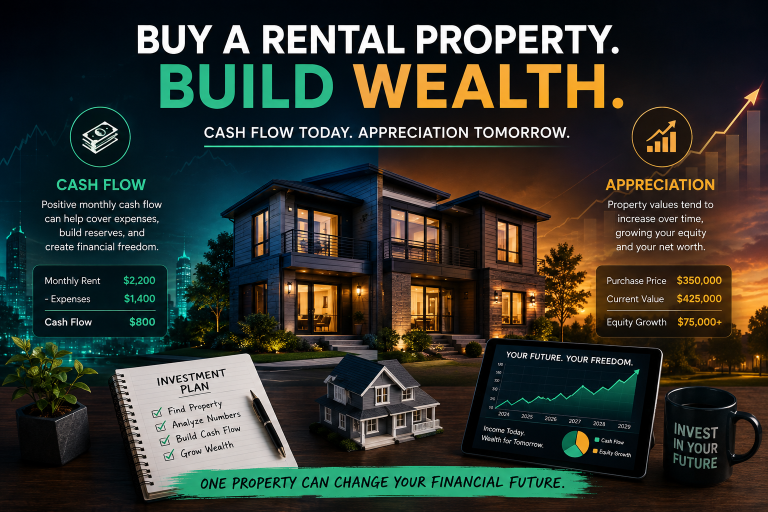
Should You Buy a Rental Property for Cash Flow or Appreciation?
Cash flow and appreciation can both build wealth through rental real estate, but they work differently. Learn how to balance income, equity, financing, and tax planning.
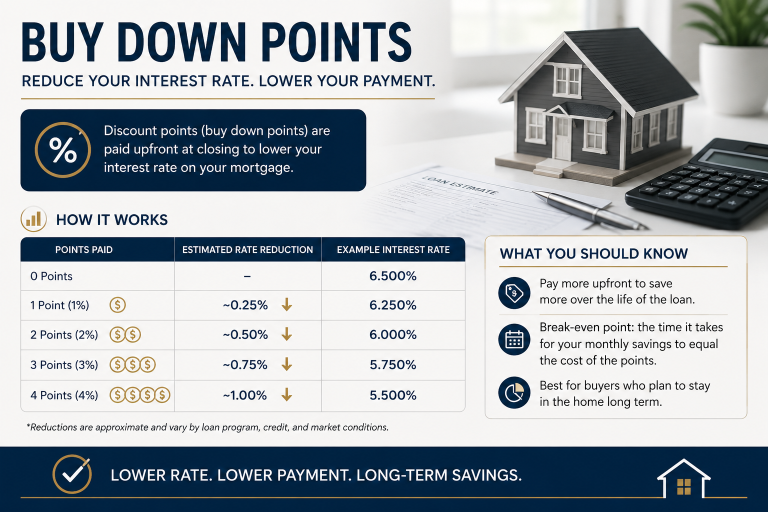
Rate Buydowns in Sonoma County: What Buyers Need to Know in 2026
Rate buydowns can lower a Sonoma County home payment, but temporary and permanent options work very differently. Learn what to compare before you commit.
View More from The Mortgage Files:
begin your mortgage journey with sonoma county mortgages
Let us make your mortgage experience easy. Trust our expertise to get you your best mortgage rate. Click below to start turning your home dreams into reality today!