
Maintaining a personal budget and having a good financial plan associated with your income is a good 1st step in preparing yourself to get mortgage loan financing. Whether you are buying a home or refinancing, consumer debts matter. It can make or break your situation. Here are some things you might want to give some consideration to when it comes time to refinance, enhance, or secure a mortgage to purchase a property.
Your ability to secure financing is going to be directly related to how good your income, credit score equity, and/or cash you have available. For this article, we’re going to be talking about debt. Credit card debt can be detrimental to your ability to secure mortgage loan financing. Credit cards can be a double-edged sword. Credit cards on one hand of the spectrum if you handle them responsibly can make your credit score go up. Whereas if you irresponsibly use them, they can make your credit score go down and add to your debt-to-income ratio. Picture this, you’ve applied for mortgage loan financing, and you get the realization that your credit score is different than what you thought it was. Based on your utilization of credit cards your credit score appears to be a little bit lower. Then you pay off those debts, increasing your utilization of credit and then your credit score could bounce back up. This is something you need to be aware of especially when it comes time to get a mortgage because it can directly affect your interest rate. Your interest rate on the mortgage loan that you’re seeking is directly tied to your credit score. It’s also tied to loan to value, occupancy, and other factors. But the credit score is the main driver of interest rate on any kind of residential mortgage loan including FHA, conventional, and VA financing.
So, what this means for you is that your credit cards want to be managed in such a way that you use them and pay them off in full each month. Whenever possible this means if you have multiple credit cards out, there with multiple payments consolidating them into one or two credit cards and keeping the other ones open with very little or no activity. This can help increase your credit score if you’re not maxing out any credit card. A good rule of thumb is to keep the credit card balances at 25% of the total allowable limit this will help maintain a high credit score and show a low debt-to-income ratio. However, it’s the payments on the credit cards that can also come back to be problematic in the future as it relates to your payment-to-income ratio. Your payment-to-income ratio is also dubbed a debt-to-income ratio. Debt-to-income is the number of expenses you have expressed as a percentage of your monthly income. For example, if you have $300 a month of credit card payments this translates to on average about $50,000 in spending power. It’s the difference between a $500,000 house and a house for $550,000. Therefore, it’s good to keep the credit cards at the 25% allowable limit and keep low balances which translates to low payments on those credit cards. By maintaining discipline over your credit cards, you’ll allow yourself to have a higher debt-to-income ratio allowance which improves your borrowing power whether purchasing or refinancing a home as well as maintaining a high credit score.
How do you know which debt to pay off first? Here’s how that works, you want to cherry-pick the obligations that have the highest payments with the lowest possible balance. This way it requires as little cash as possible to get a big bang for your buck in terms of spending power and or debt-to-income ratio allowance. Not sure where to begin? Work with a local lender who understands the housing market. Someone who understands credit in personal finance, and can help walk you through the debts that you have on your credit report so you can improve your borrowing power and your credit score at the same time. Getting you the lowest possible interest rate on the most affordable loan for you and your family.
Looking to get a mortgage? Start with a no-cost loan quote today!
Share:
RELATED MORTGAGE ADVICE FROM SCOTT SHELDON
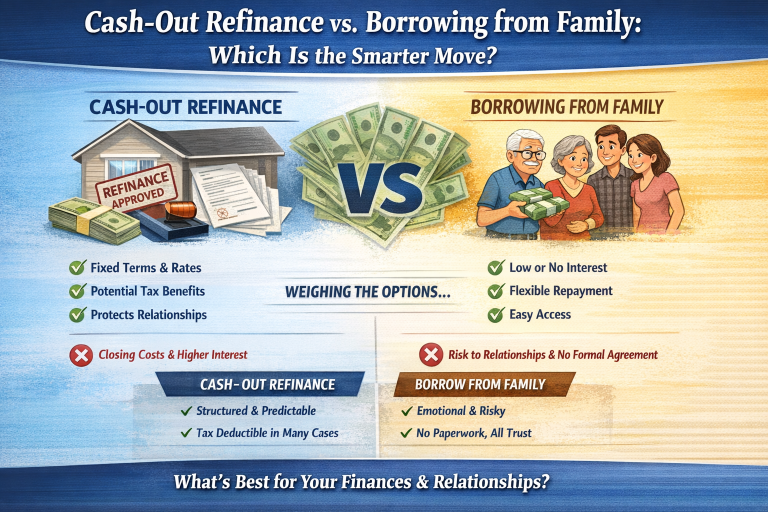
Cash-Out Refinance vs. Borrowing from Family: Which Is the Smarter Move?
You’ve built equity in your home. Maybe a lot of it. At the same time,…
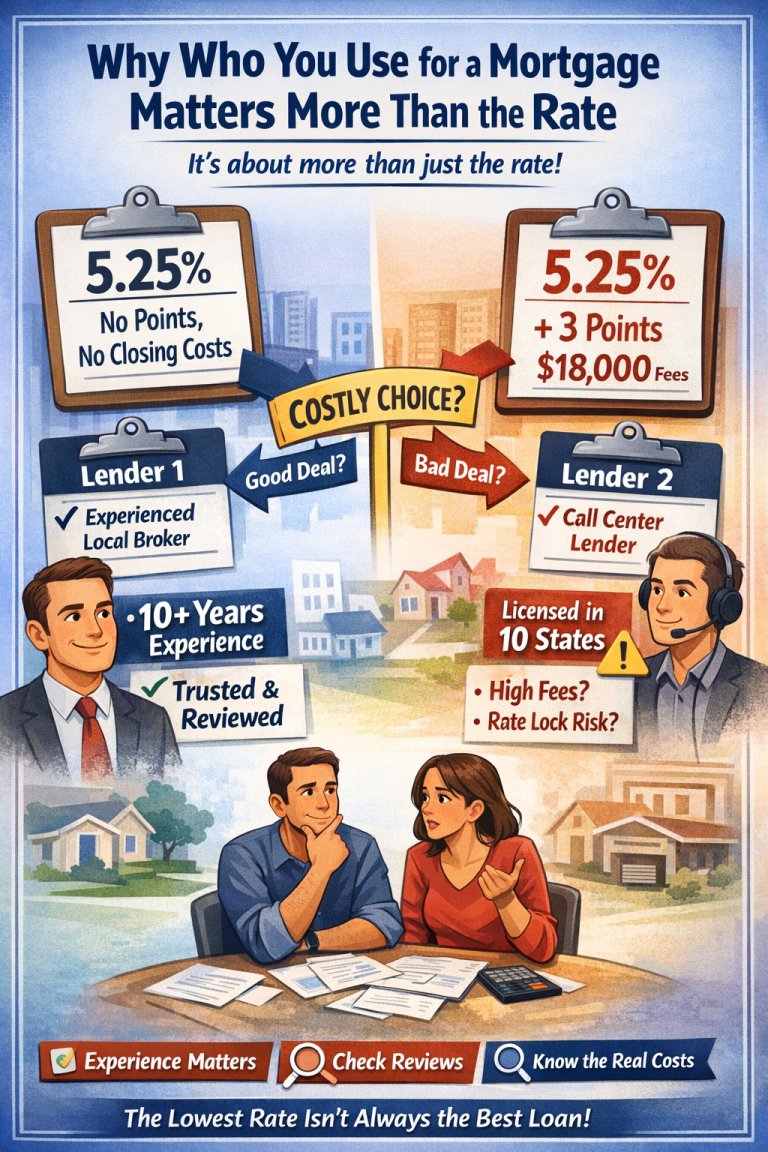
Why Who You Use for a Mortgage Matters More Than the Rate
Who you use for a mortgage loan matters. Let’s walk through a very real scenario…

On Hold or Just Unsure? Why You Wanted to Buy in the First Place
Every so often, someone gets pre-approved, looks at homes, runs numbers… and then says, “We’re…

Should You Pay Off Credit Cards Before Buying a Home?
One of the most common objections home buyers provide is this: “I want to wait…
View More from The Mortgage Files:
begin your mortgage journey with sonoma county mortgages
Let us make your mortgage experience easy. Trust our expertise to get you your best mortgage rate. Click below to start turning your home dreams into reality today!