
A 1031 tax-deferred exchange is a deferred exchange in the gain of an investment property used to acquire another investment property. Make no mistake this is a deferment where you’re kicking the can of the paying the property taxes obligation to some point in the future when you sell the property.
Here is an example of how a 1031 exchange could work. let’s say that you bought a condominium several years ago and you originally paid $300,000 for the property. Let’s say the property has ballooned in value to $450k for example sake. So, you have a gain of $150,000 on a rental property that you otherwise would be paying taxes on if you were to sell that property.
Unlike a primary home in which case such a sale would be tax exempt up to $250,000 for a single person or 500,000 for a married couple the property as an investment property is subject to taxation. If it is your goal to avoid taxation and to keep your money working for you enter the 1031 tax-deferred exchange. You would have to find another property of equal or higher value to roll your taxes into the purchase of an alternative investment. Using this scenario if you decided to upgrade to a multi-family property for $600,000 you could use the gain of $150,000 to buy the new rental. That $150,000 would go towards the down payment and the closing costs of the acquisition of the other rental property subsequently allowing you to defer taxes to an unknown later date.
Here is why it’s beneficial-market forces create the gain which represents the down payment use to acquire another rental property. When you acquire a rental property the more money you put as a down payment the lower your fixed cost is, the higher potential return on investment you can attain. In such an example you would have the ability to purchase a property that has an additional unit so you’re essentially getting two houses for the price of one your earmarking the 25% down payment needed to buy a 2-unit property when using a loan. In a 1031 tax-deferred exchange you can net out and receive no monies. If you do it’s called boot, and it is unrecognized is a 1031 exchange and you would be subject to taxation.
1031 tax-deferred exchanges are for rental properties only and can be dramatically beneficial. To facilitate the sale and repurchase you need to use as a qualified intermediary which handles all the monies from one property to be rolled into the transfer in the acquisition of another. They fill out all the paperwork and they make sure that the transaction is handled to the tiniest of details.
You must identify three other properties from when you initiate your 1031 exchange and you must close on one of those properties within 180 days of your 1031 exchange.
Looking to get a mortgage buy a rental with a 1031 exchange component? We can help begin with a fast rate quote now.
Share:
RELATED MORTGAGE ADVICE FROM SCOTT SHELDON

Why Timing the Housing Market Doesn’t Work (And What Actually Does)
Let’s start with a simple idea: trying to perfectly time the housing market is not…
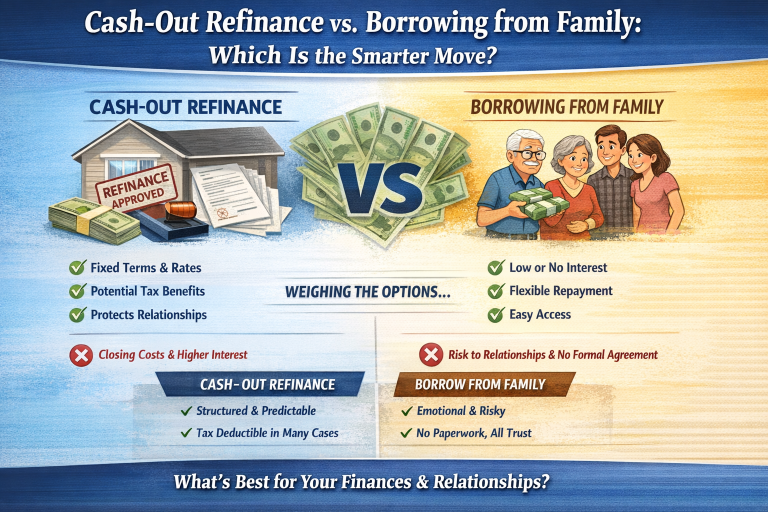
Cash-Out Refinance vs. Borrowing from Family: Which Is the Smarter Move?
You’ve built equity in your home. Maybe a lot of it. At the same time,…

Why Housing Inventory Still Feels Tight—And What Interest Rates Have to Do With It
Let’s start with a simple but powerful scenario. A homeowner locked in a mortgage at…

Why Who You Use for a Mortgage Matters More Than the Rate
Who you use for a mortgage loan matters. Let’s walk through a very real scenario…
View More from The Mortgage Files:
begin your mortgage journey with sonoma county mortgages
Let us make your mortgage experience easy. Trust our expertise to get you your best mortgage rate. Click below to start turning your home dreams into reality today!