
The U.S. housing market has been grappling with a significant inventory shortage, with an estimated deficit of 3.7 million homes. This scarcity has intensified competition among buyers, leading to bidding wars and elevated home prices. In this context, a reduction in mortgage interest rates can have profound effects on the market dynamics, particularly concerning home affordability and pricing.
The Relationship Between Interest Rates and Housing Demand
Mortgage interest rates play a pivotal role in determining a buyer’s purchasing power. Lower rates reduce monthly mortgage payments, enabling buyers to afford more expensive homes without increasing their budgets. For instance, a $600,000 home financed at a 6.5% interest rate would have a higher monthly payment compared to the same home financed at 5.5%. This decrease in rates effectively increases the pool of potential buyers, as more individuals find themselves able to afford homeownership.
Impact on Home Prices Amidst Inventory Shortages
In a market already constrained by limited supply, an influx of buyers spurred by lower interest rates can exacerbate the imbalance between supply and demand. This heightened competition often leads to increased home prices. As more buyers enter the market, sellers may receive multiple offers, driving prices upward. Consequently, the same home that was valued at $600,000 could escalate to $650,000 or even $675,000 as buyers compete for the limited available properties.
Current Economic Indicators and Projections
As of February 2025, the average 30-year fixed mortgage rate hovers near 7%, slightly lower than the peak levels of 2024 but still above pre-2022 figures. Despite these elevated rates, housing demand remains robust, partly due to rising incomes and a resilient job market. However, affordability challenges persist, especially for first-time buyers. Analysts anticipate that mortgage rates may decline modestly throughout the year, potentially reaching the mid-6% range. This projected decrease could stimulate additional demand, further straining the already limited housing inventory.
Income Growth and Its Influence on the Market
Over the past few years, median household incomes have experienced steady growth, bolstering buyers’ purchasing power. This increase in income, combined with potential declines in interest rates, can lead buyers to consider higher-priced homes. While this is advantageous for individual purchasing power, it can collectively contribute to upward pressure on home prices, especially in markets with persistent inventory shortages.
Potential Solutions and Considerations
Addressing the housing inventory challenge requires a multifaceted approach:
-
Increased Housing Production: Encouraging the construction of new homes, particularly in high-demand areas, can help alleviate the supply-demand imbalance. Policies that incentivize builders and streamline permitting processes are essential steps in this direction.
-
Zoning Reforms: Modifying zoning laws to allow for higher-density housing can facilitate the development of more units, making better use of available land and resources.
-
Adaptive Reuse: Converting underutilized commercial spaces into residential units can provide additional housing options without the need for new land development.
-
Financial Assistance Programs: Offering grants, tax incentives, or low-interest loans to first-time homebuyers can help mitigate affordability challenges exacerbated by rising home prices.
Conclusion
While lower mortgage interest rates can enhance individual purchasing power, in a market constrained by significant inventory shortages, they can also lead to increased home prices, further challenging affordability. A comprehensive strategy that includes boosting housing supply, implementing policy reforms, and providing financial assistance is crucial to address these complex issues effectively.
Looking to get a mortgage? Get a no cost quote now!
Share:
Posted in: home prices, housing inventory, housing market, interest rates, mortgage rates, real estate
RELATED MORTGAGE ADVICE FROM SCOTT SHELDON

Cash-Out Refinance vs. Borrowing from Family: Which Is the Smarter Move?
You’ve built equity in your home. Maybe a lot of it. At the same time,…
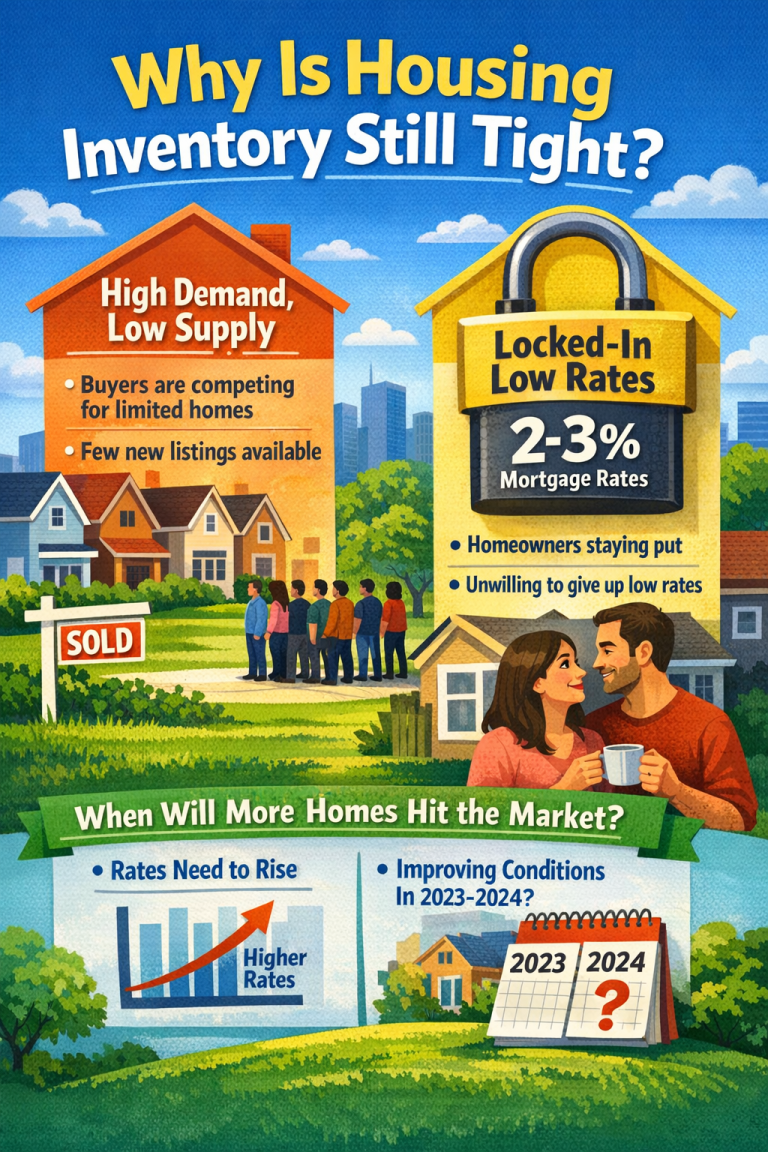
Why Housing Inventory Still Feels Tight—And What Interest Rates Have to Do With It
Let’s start with a simple but powerful scenario. A homeowner locked in a mortgage at…

Why Who You Use for a Mortgage Matters More Than the Rate
Who you use for a mortgage loan matters. Let’s walk through a very real scenario…

On Hold or Just Unsure? Why You Wanted to Buy in the First Place
Every so often, someone gets pre-approved, looks at homes, runs numbers… and then says, “We’re…
View More from The Mortgage Files:
begin your mortgage journey with sonoma county mortgages
Let us make your mortgage experience easy. Trust our expertise to get you your best mortgage rate. Click below to start turning your home dreams into reality today!