
When rates start moving down, homeowners naturally ask when they should refinance their mortgage. The old answer was, “Wait for a 1% drop.” That rule is easy to remember, but it is too simple to be very useful.
What I am really looking for is a financial benefit to the homeowner. How much lower rates need to be to refinance depends heavily on the amount you still owe, the new payment, the true cost of the loan, and how long you expect to keep it.
The bigger the mortgage, the less rates may need to fall
A half-percent lower rate has a very different effect on a $750,000 mortgage than it does on a $250,000 mortgage. The rate change is identical, but the dollar savings are not.
Let’s put some real numbers around this. Assume each borrower has 30 years remaining, refinances into a new 30-year fixed loan, and moves from 7.00% to 6.50%. These figures show principal and interest only. They do not include taxes, insurance, or mortgage insurance.
- $250,000 balance: payment drops from about $1,663 to $1,580, saving about $83 per month.
- $350,000 balance: payment drops from about $2,329 to $2,212, saving about $116 per month.
- $500,000 balance: payment drops from about $3,327 to $3,160, saving about $166 per month.
- $750,000 balance: payment drops from about $4,990 to $4,741, saving about $249 per month.
- $1,000,000 balance: payment drops from about $6,653 to $6,321, saving about $332 per month.
Here’s where the math matters. A .5 lower rate might be worth refinancing on a $750,000 or $1,000,000 balance. On a $250,000 balance, the same rate improvement may not cover the costs quickly enough.
As a general starting point, I would seriously evaluate about a 0.50% reduction on mortgages of $750,000 or more. At $500,000 or more, roughly 0.75% may create a compelling benefit. Under $400,000, it may take closer to a full 1% reduction. These are guidelines, not rules.
What is a net tangible benefit?
Net tangible benefit is mortgage language for a simple question: does this refinance leave you meaningfully better off? A lower rate alone does not answer that question.
The benefit may be lower monthly principal and interest, less mortgage insurance, a shorter payoff schedule, or more stable payments. The costs include lender fees, title and escrow charges, appraisal costs, points, and prepaid items. Lender credits can offset some costs, but they often come with a higher interest rate.
Do not refinance just because a lender calls and says they can lower your rate. Ask for a side-by-side comparison of your current loan and the proposed loan. The rate is only part of the equation.
Use break-even time to make the decision real
The basic mortgage refinance break-even calculation is simple: divide the true refinance cost by the monthly savings. If refinancing costs $5,000 and saves $400 per month, the approximate break-even point is 12.5 months.
If you plan to sell in six months, that refinance probably does not make sense. If you expect to keep the mortgage another five or ten years, a 12- to 24-month break-even can look very reasonable.
Be careful with “no-cost” refinancing, too. It can be a good option, but the costs are usually covered through a lender credit tied to a higher rate. That may be the right tradeoff if you expect to move soon. It is not automatically the best long-term choice.
Payment savings are not the whole story
This is where people sometimes get tripped up. A homeowner who is 10 years into a 30-year mortgage has 20 years remaining. Refinancing into a new 30-year loan can lower the payment, partly because the balance is being repaid over 30 years again.
That does not make it a bad refinance. It just means the lower payment is not all coming from the new rate. Compare the proposed payment with a 20-year term, or keep making your old payment after refinancing. Either approach can preserve a faster payoff while still taking advantage of a lower rate.
Also look at the total cost over the time you expect to keep the new mortgage. A lower payment improves monthly cash flow. Improving your overall financial position means the savings, costs, loan term, and future plans all work together.
Other reasons refinancing can make sense
Rate-and-term savings are usually the main reason to refinance, but they are not the only reason. Moving from FHA financing to conventional financing can make sense when it removes ongoing FHA mortgage insurance. The details matter, so homeowners considering that move should understand when switching from FHA to conventional may help.
A refinance may also help you move from an adjustable-rate mortgage to a fixed rate, shorten the loan term, or restructure payments around retirement or another major change. A cash-out refinance used to consolidate high-interest debt needs extra care, because unsecured debt is being moved onto the home. It should improve the full household budget, not simply create temporary breathing room.
Escrow accounts deserve a quick mention. Your old escrow balance is generally refunded after the existing loan pays off, while the new loan may require a new initial escrow deposit. That is a cash-flow issue at closing, not necessarily a refinance cost.
Frequently asked questions about refinancing
Is a .5 lower rate worth refinancing?
It can be, especially on a larger balance. A 0.50% reduction on $750,000 saves far more each month than it does on $250,000. Run the break-even calculation using real loan terms and costs.
Is .75 lower worth refinancing?
For many homeowners with balances around $500,000 or more, it is worth a serious look. Points, lender credits, mortgage insurance, and how long you will keep the loan can change the answer.
Should I refinance if rates drop 1 percent?
A 1% drop often creates a strong opportunity, particularly on smaller balances. Still, it is not an automatic yes. Check the costs, new term, and break-even period before moving forward.
When does refinancing make sense?
Refinancing makes sense when the net benefit is clear and you expect to keep the new mortgage long enough to recover the costs. It can also make sense to remove mortgage insurance, gain payment stability, or pay the loan off faster.
Bottom line: do not refinance because rates dropped by some arbitrary percentage. Refinance because the math makes sense for your mortgage, your costs, and your plans.
If you are wondering whether today’s rates create enough savings on your specific mortgage, the best next step is to run the actual numbers rather than rely on a rule of thumb. I can help you compare the payment, costs, and break-even time so you can make a clear decision. Get a free mortgage rate quote today!
Share:
RELATED MORTGAGE ADVICE FROM SCOTT SHELDON

Should You Buy a Rental Property for Cash Flow or Appreciation?
Cash flow and appreciation can both build wealth through rental real estate, but they work differently. Learn how to balance income, equity, financing, and tax planning.
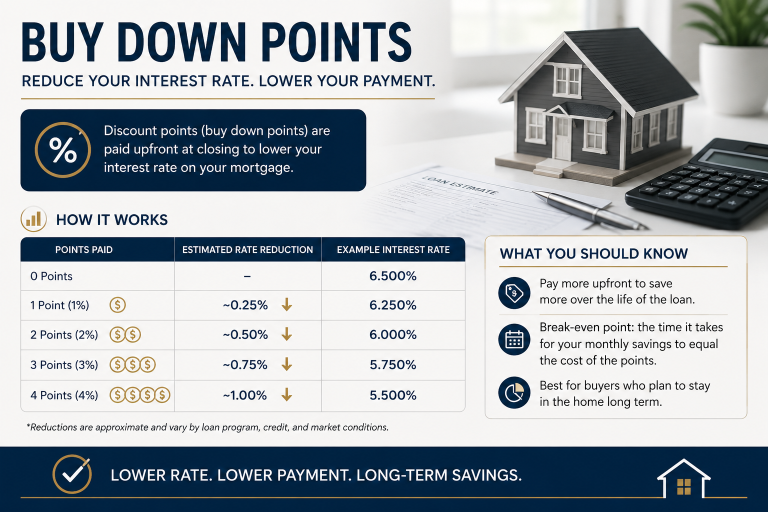
Rate Buydowns in Sonoma County: What Buyers Need to Know in 2026
Rate buydowns can lower a Sonoma County home payment, but temporary and permanent options work very differently. Learn what to compare before you commit.
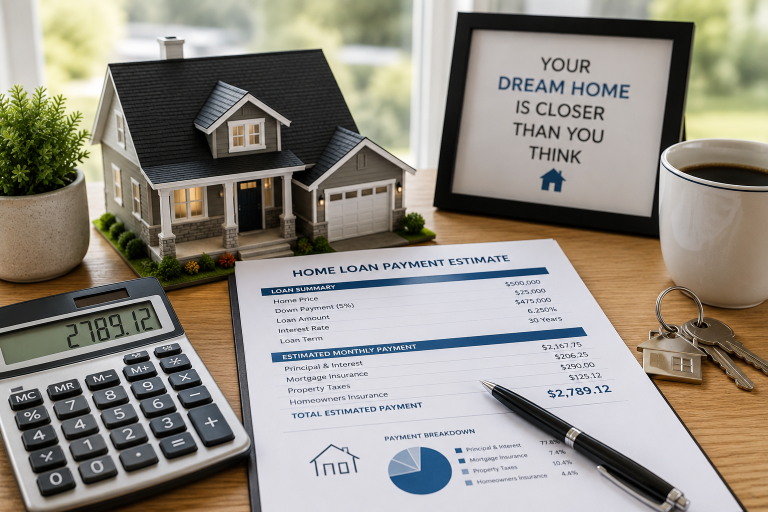
Could FHA Mortgage Insurance Be Reduced Again? Here’s What Homebuyers Should Know
If you’ve been thinking about buying a home with an FHA loan, you may have…

Could Conventional Mortgages Become Assumable? The Industry Is Talking, But Nothing Is Official Yet
One of the biggest challenges facing today’s housing market isn’t necessarily home prices—it’s something many…
View More from The Mortgage Files:
begin your mortgage journey with sonoma county mortgages
Let us make your mortgage experience easy. Trust our expertise to get you your best mortgage rate. Click below to start turning your home dreams into reality today!