
If you are comparing a fixed loan with an adjustable-rate mortgage, the lower ARM rate can be hard to ignore. But the real question is not whether an ARM is good or bad. It is whether that loan structure fits your likely time in the home, your budget, and your backup plan if rates rise.
An ARM can be a great tool for the right borrower and the wrong loan for someone else. A lower rate does not automatically mean it is the better loan. You need to know what you are saving now and what you could be taking on later.
How does an adjustable-rate mortgage work?
An adjustable-rate mortgage, often called an ARM mortgage, starts with an interest rate that is fixed for a stated period. After that period ends, the rate can adjust at scheduled intervals under the terms of the loan.
A 5/6 ARM generally has a fixed rate for the first five years. It can then adjust every six months. A 7/6 ARM is generally fixed for seven years, then may adjust every six months. A 10/6 ARM is generally fixed for 10 years before those possible semiannual adjustments begin.
The adjustment is usually tied to an index, plus a set margin. Think of the index as a published market measure and the margin as the lender’s fixed add-on. You do not need to become an expert in either one, but you should know which index applies and how the margin works before closing.
For an ARM vs. fixed rate mortgage decision, the fixed loan gives you the same principal-and-interest payment for the full term, assuming you do not refinance. An ARM gives you certainty during its initial fixed period, followed by the possibility of a higher or lower rate and payment.
Here’s where the math matters
An ARM should not be selected just because its advertised rate is lower than a 30-year fixed mortgage. Ask how much lower it is, what that difference saves each month, and whether that savings is meaningful for your household.
Let’s say you borrow $500,000 on a 30-year term. At 6.50%, the principal-and-interest payment is about $3,160 per month. At an initial rate of 5.75% on a 7/6 ARM, the principal-and-interest payment is about $2,918 per month.
- Loan amount: $500,000
- 30-year fixed rate: 6.50%
- Fixed payment: about $3,160 per month
- 7/6 ARM initial rate: 5.75%
- Initial ARM payment: about $2,918 per month
- Monthly savings: about $242
- Annual savings: about $2,909
- Initial fixed period: seven years
That is real money. Over seven years, before considering any later adjustment, the payment difference adds up to roughly $20,000. Still, the question is what you are actually getting in exchange for taking the additional risk.
If the ARM only saves $40 or $60 a month, it may not be enough to justify less certainty. If it saves several hundred dollars a month and you have a solid reason to expect a sale or payoff before year seven, the economics may look very different.
Who should get an ARM mortgage?
When does an ARM mortgage make sense? Usually, it is because the borrower has a realistic timeline that is comfortably shorter than the initial fixed period. The plan should make sense even if future mortgage rates do not improve.
For example, a buyer purchasing a starter home may reasonably expect to move within five or six years. A 7/6 ARM could provide a lower payment during the entire expected ownership period. Someone relocating for a job, with a known transfer date, may be in a similar position.
An ARM may also deserve consideration if you expect a substantial, well-supported change in your finances. Maybe you will receive proceeds from selling another property, or you have a documented plan to pay down a large part of the loan. The point is that the plan needs to be based on facts, not hope.
Some borrowers choose an ARM because it frees up monthly cash flow for savings, repairs, or other priorities. That can be sensible if the payment is still affordable after a future adjustment. It should never be a way to stretch into a home that only works at the starting rate.
Who probably should choose a fixed-rate mortgage?
If you plan to stay in the home for decades, a fixed-rate mortgage is often the cleaner choice. You know your principal-and-interest payment will not change, which makes household planning much easier.
An ARM may not fit if you need absolute payment predictability or would struggle if the payment increased. It is also a poor fit for anyone who does not fully understand when and how the rate can change.
The biggest mistake is assuming you will just refinance later. Refinancing is never guaranteed. Rates may be higher, home values may change, your income or credit could change, and lending guidelines may be different when the time comes.
Do not take an ARM solely because it is the only way you can qualify for the house. A mortgage needs to work in your real life today. It also needs to leave enough breathing room for the future.
Understand the caps before you sign
ARMs typically have caps that limit how much the interest rate can rise. There may be an initial adjustment cap, a cap for later adjustments, and a lifetime cap over the life of the loan.
For instance, a loan might use a 2/1/5 cap structure. That generally means the first adjustment is limited to two percentage points, later adjustments are limited to one point at a time, and the rate cannot rise more than five points above the starting rate. Actual cap structures vary by loan program and lender.
Before choosing an ARM, ask for the maximum possible rate and an estimate of the corresponding payment. You may never reach that number, but you should be comfortable knowing it exists. This is one of the most important adjustable rate mortgage pros and cons to weigh.
Bottom line: do not choose an adjustable-rate mortgage simply because the starting rate is lower. Choose it because the savings, fixed period, expected time in the home, and potential future payment all make sense together. Mortgage rates, ARM structures, indexes, margins, caps, qualification requirements, and loan availability vary by lender and borrower.
If you are asking, “Should I choose an ARM or fixed mortgage?” before making an offer or refinancing, compare both options using your actual loan amount and timeline. A clear side-by-side review can show whether the payment savings are worth the tradeoff. Get a free mortgage rate quote today.
Share:
RELATED MORTGAGE ADVICE FROM SCOTT SHELDON

What to Know About Getting a Mortgage Loan in a Community Property State With FHA or VA Financing
In a community property state such as California, a non-borrowing spouse’s debts can still affect FHA or VA mortgage qualification. Here is what buyers need to know.
How Much Lower Do Mortgage Rates Need to Go Before It Makes Sense to Refinance?
A refinance is not about an arbitrary rate drop. Learn how loan size, costs, monthly savings, and break-even time determine whether it makes sense.

Should You Buy a Rental Property for Cash Flow or Appreciation?
Cash flow and appreciation can both build wealth through rental real estate, but they work differently. Learn how to balance income, equity, financing, and tax planning.
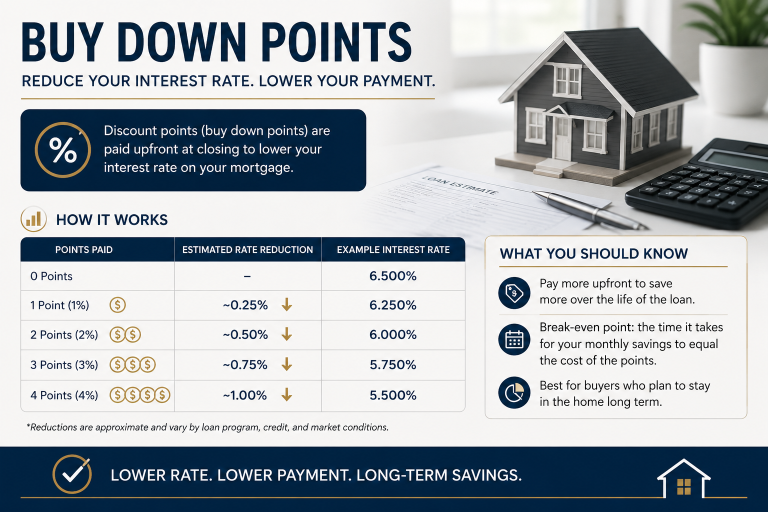
Rate Buydowns in Sonoma County: What Buyers Need to Know in 2026
Rate buydowns can lower a Sonoma County home payment, but temporary and permanent options work very differently. Learn what to compare before you commit.
View More from The Mortgage Files:
begin your mortgage journey with sonoma county mortgages
Let us make your mortgage experience easy. Trust our expertise to get you your best mortgage rate. Click below to start turning your home dreams into reality today!