
When should you rent instead of buying a house? Renting may be the smarter move when your job, location, savings, or monthly budget is uncertain. A home can be a great long-term wealth-building tool, but buying the right house at the wrong time can still be the wrong financial decision.
After more than 20 years in mortgage finance, I believe in homeownership. I also believe people should not buy simply because they can get approved. The numbers matter, but so does where you are in life.
Is Renting Really Throwing Money Away?
No. Renting is not automatically throwing money away. Sometimes you are paying for flexibility: the ability to change jobs, move neighborhoods, handle a life change, or keep more cash available without having to sell a property.
Owning builds equity in two main ways. Part of each mortgage payment may reduce your loan balance, which is called principal reduction. Your home may also appreciate over time. But ownership also comes with property taxes, homeowners insurance, maintenance, repairs, closing costs, and eventual selling costs.
Here is a simple rent versus buy example. Let’s say rent is $2,800 per month and owning would cost $4,000 per month for principal, interest, taxes, insurance, and any HOA dues. The $1,200 monthly difference equals $14,400 per year.
That does not automatically mean renting is $14,400 cheaper. Some of the mortgage payment reduces principal, and the home could appreciate. On the other hand, owning is not automatically better. Repairs, transaction costs, and changes in value all matter. A useful rent vs buy calculator needs to look at the whole picture, not just rent versus the mortgage payment.
Should I Buy a House If I’m Changing Jobs?
If your income or work location may change soon, pause before buying. Job stability is not just a loan-approval issue. It is a real-life affordability issue after you own the home.
Let’s say you earn $100,000 a year and comfortably qualify for a mortgage today. You are also considering a career change within the next 12 months. The new field may start you at $75,000 a year. A payment that felt reasonable at $100,000 can feel very different at $75,000.
There is also the relocation question. If the new job takes you to another city, you could be forced to sell much sooner than planned. Buying and selling within a short window can be expensive, even when the property value rises.
Here’s where people get tripped up: they ask, “Can I qualify for the mortgage today?” The better question is, “Will this payment and this house still make sense if my life looks different two years from now?” For a closer look at the income, credit, and down payment pieces of approval, see how mortgage approval really works.
Should I Buy a House If I Might Move Soon?
If you expect to move in a few years, renting can make more sense than buying. There is no universal answer to how long you should live in a house before buying. The break-even period depends on your loan, local market, appreciation, maintenance, purchase costs, selling costs, and the property itself.
Let’s say you buy a $600,000 home and sell it two years later. Even with modest appreciation, the costs of buying, maintaining, and selling can use up a meaningful share of the appreciation and the equity you built. Real estate commissions are negotiable, and selling expenses vary, but they are still real costs.
A home does not need to lose value for a short ownership period to disappoint financially. Homeownership often becomes more compelling when you have enough time for principal reduction and possible appreciation to do their work. If you are new to Sonoma County, unsure about school districts, or still learning which neighborhoods fit your life, renting for a year can provide valuable information.
How Much Money Should I Have Left After Buying a House?
Having enough money to close is not the same as having enough money to responsibly own a home. A down payment and closing costs get you through the front door. Emergency reserves help you stay comfortable once you are inside.
Let’s say a buyer has $35,000 saved. They use $30,000 for the down payment and closing-related expenses. They own a home, but only $5,000 remains in the bank. Three months later, the water heater costs $2,000, an unexpected plumbing repair costs $1,500, and the car needs $1,200 of work.
Nearly the entire reserve is gone. A landlord usually handles major property repairs for a renter. As a homeowner, those costs are yours. Just because you can qualify does not necessarily mean you should buy if closing will leave you with little breathing room.
What if I have high-interest debt?
High-interest credit-card debt can be another reason to wait. Let’s say you have $25,000 in credit-card balances and plan to use nearly all your savings for a down payment. Paying down expensive debt, rebuilding savings, and then buying from a stronger position may be the better plan.
This is not a universal requirement. Some buyers have manageable debt and strong cash flow. But buying a house should improve your financial life, not consume it. If debt payments already make each month tight, a mortgage and home repairs can add too much pressure. You may want to review whether to pay off credit cards before buying a home before committing your savings.
Is It Better to Rent If Buying Would Stretch My Budget?
It may be. Being house poor means too much of your income goes toward housing, leaving too little for everything else. Lender approval is an important guideline, but it is not permission to spend the maximum amount possible.
Suppose you rent for $2,500 a month. The house you want would create a total monthly housing expense of about $4,200 after principal, interest, property taxes, homeowners insurance, and HOA dues. That is $1,700 more each month, before maintenance and repairs.
Ask the practical question: what does that $1,700 prevent you from doing? It might limit retirement savings, emergency reserves, debt payoff, childcare, travel, investing, or simply enjoying life without worrying about every bill.
Do not buy because friends are buying or because you fear missing out. Prices can rise, stay flat, or fall. Rates can change too. Nobody knows exactly what one home will be worth several years from now. A home should fit your financial position and lifestyle today, not just a prediction about tomorrow.
When Does Buying a House Make More Sense Than Renting?
Buying often makes sense when you have stable income, adequate reserves after closing, manageable consumer debt, and a reasonable expectation that you will stay in the area. It also helps when the property fits your foreseeable needs and you want the control that comes with owning.
A fixed-rate mortgage can provide payment stability for the principal and interest portion. Over time, principal reduction and potential appreciation can help build home equity. Those are meaningful benefits. They simply do not erase the need for a solid financial foundation.
Renting vs. buying a house: common questions
Is renting really throwing money away? No. Rent pays for a place to live and can preserve financial flexibility. Ownership can build equity, but it also carries costs and risk.
How long should I plan to stay before buying a house? Long enough for your personal break-even calculation to work. There is no universal five-year rule. Include purchase costs, selling costs, loan terms, expected maintenance, and your likely moving date.
Should I buy a house if I might change jobs? Be careful if the change may reduce income or require relocation. Make sure the payment works under the likely new situation, not only your current one.
How much savings should I have left after buying? Keep enough emergency reserves for normal life surprises and home repairs. The right amount varies, but using every dollar to close is usually a warning sign.
Is it smarter to rent when mortgage payments are much higher than rent? Sometimes. Compare the full cost and the opportunity cost of the difference, while also recognizing potential equity from principal reduction and appreciation.
Homeownership can be one of the strongest long-term financial tools available to many families. But renting for another six months, one year, or two years does not mean giving up on that goal. It may put you in a far better position to become a successful homeowner later.
This article provides general educational information, not individualized mortgage, investment, tax, legal, or financial advice. Consider your own goals and consult qualified professionals for advice about your situation.
If you are weighing whether to rent or buy and want to see how a purchase payment fits your actual budget, career plans, and savings, it is worth running the real numbers before pressure or generic rules make the decision for you. Get a free mortgage rate quote today.
Share:
RELATED MORTGAGE ADVICE FROM SCOTT SHELDON

Should You Pay Off Your Mortgage or Invest the Cash Instead?
Paying off a mortgage offers guaranteed interest savings. Investing may offer growth, but it also brings risk. Here is how to weigh the decision.
Why Does My Mortgage Lender Keep Asking for the Same Documents?
Repeated mortgage document requests are frustrating, but they usually involve updated information, missing pages, or follow-up questions needed before closing.
Should You Consider an Adjustable-Rate Mortgage? Who Is an ARM Appropriate For?
An adjustable-rate mortgage can save money for the right borrower, but only when the initial savings, timeline, and future payment risk all fit the plan.
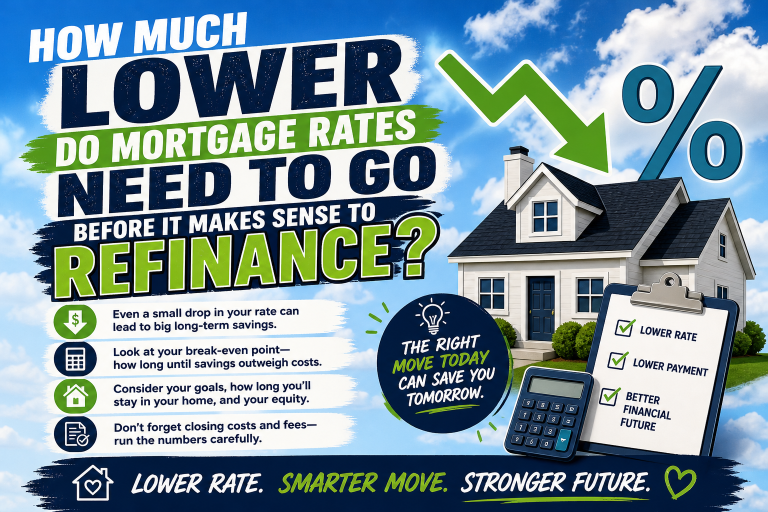
How Much Lower Do Mortgage Rates Need to Go Before It Makes Sense to Refinance?
A refinance is not about an arbitrary rate drop. Learn how loan size, costs, monthly savings, and break-even time determine whether it makes sense.
View More from The Mortgage Files:
begin your mortgage journey with sonoma county mortgages
Let us make your mortgage experience easy. Trust our expertise to get you your best mortgage rate. Click below to start turning your home dreams into reality today!