
Can You Use a Cash-Out Refinance to Pay Off Delinquent Property Taxes?
If you’re behind on property taxes and looking for a way to catch up, you might be wondering: can you use a cash-out refinance to pay off those delinquent taxes? The short answer is yes—but only if you meet the specific requirements of either FHA or conventional loan programs like Fannie Mae or Freddie Mac.
Many borrowers run into confusion on this topic, especially if a lender flat-out says it’s not allowed. But in reality, there’s no official guideline from FHA or Fannie Mae that prohibits using cash-out refinance funds to pay off back taxes—as long as the taxes are paid off at or before closing and the borrower qualifies in all other respects.
FHA Cash-Out Guidelines for Paying Off Delinquent Property Taxes
FHA allows borrowers to do a cash-out refinance for a variety of reasons, including paying off delinquent property taxes—but only if those taxes are paid in full at or before closing. The loan must meet the usual FHA refinance rules, including:
-
You must have sufficient equity (FHA cash-out is limited to 80% LTV)
-
You must qualify with acceptable credit and income
-
You must occupy the home as your primary residence
-
The title must be clear at closing (no unresolved liens)
So, if your taxes are delinquent and there’s a tax lien recorded against the property, the title company can pay those taxes out of the refinance proceeds at closing—but they must be cleared as a condition of closing.
FHA does not require a specific waiting period after a tax delinquency. However, if there are signs of financial mismanagement or credit instability, underwriters may take a closer look.
Conventional Loan Guidelines: Fannie Mae & Freddie Mac Refinance Rules
Fannie Mae also permits cash-out refinances for most purposes, including paying off taxes. According to Fannie Mae’s Selling Guide, borrowers can use proceeds from a cash-out refinance to cover any expense—as long as:
-
The loan meets standard cash-out LTV limits (typically 80% for a primary residence)
-
The borrower qualifies under current underwriting guidelines
-
Any liens—including delinquent property taxes—are paid off at or before closing
-
The property title is clear before the new mortgage is recorded
So again, the issue isn’t the taxes—it’s whether the title can be cleared and the borrower qualifies. Fannie Mae and Freddie Mac do not publish any rule that says you cannot use cash-out proceeds to cover delinquent taxes.
Why You Might Hear “No” Anyway
If you’re being told you can’t do it, it’s likely because of a lender overlay—meaning the lender has stricter rules than FHA or Fannie Mae. Some lenders simply don’t want the risk of dealing with older delinquencies or large unpaid tax bills.
But if the delinquency is being resolved through the refinance, and the title is clean at funding, many lenders—especially brokers or non-bank lenders—can and will allow it.
Bottom Line: Mortgage Tax Payoff Options
You can use a cash-out refinance to pay off delinquent property taxes with both FHA and conventional loans—as long as the taxes are paid at or before closing and you meet standard qualifying guidelines.
If your lender says it’s not allowed, you may need to work with someone who doesn’t impose overlays and understands how to structure this kind of deal.
Need help structuring your refinance for taxes?
I’m happy to take a look at your scenario and see what options are available to help you move forward.
Looking to get a loan? Get a free quote today!
Share:
RELATED MORTGAGE ADVICE FROM SCOTT SHELDON

Why Timing the Housing Market Doesn’t Work (And What Actually Does)
Let’s start with a simple idea: trying to perfectly time the housing market is not…
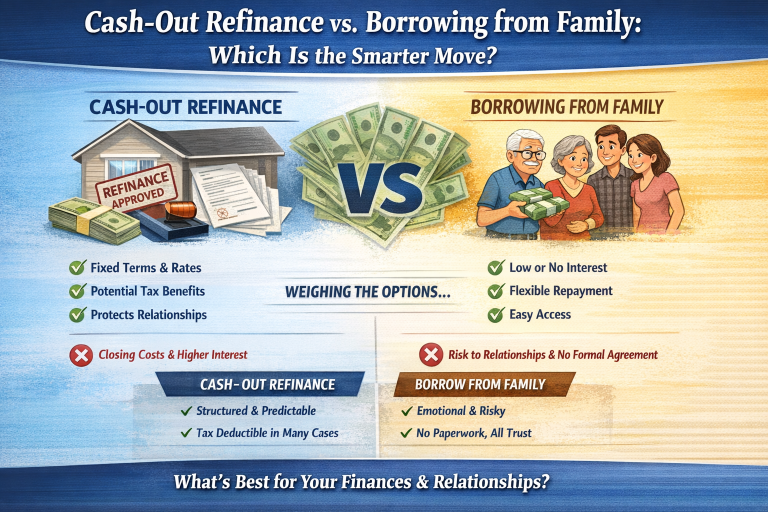
Cash-Out Refinance vs. Borrowing from Family: Which Is the Smarter Move?
You’ve built equity in your home. Maybe a lot of it. At the same time,…
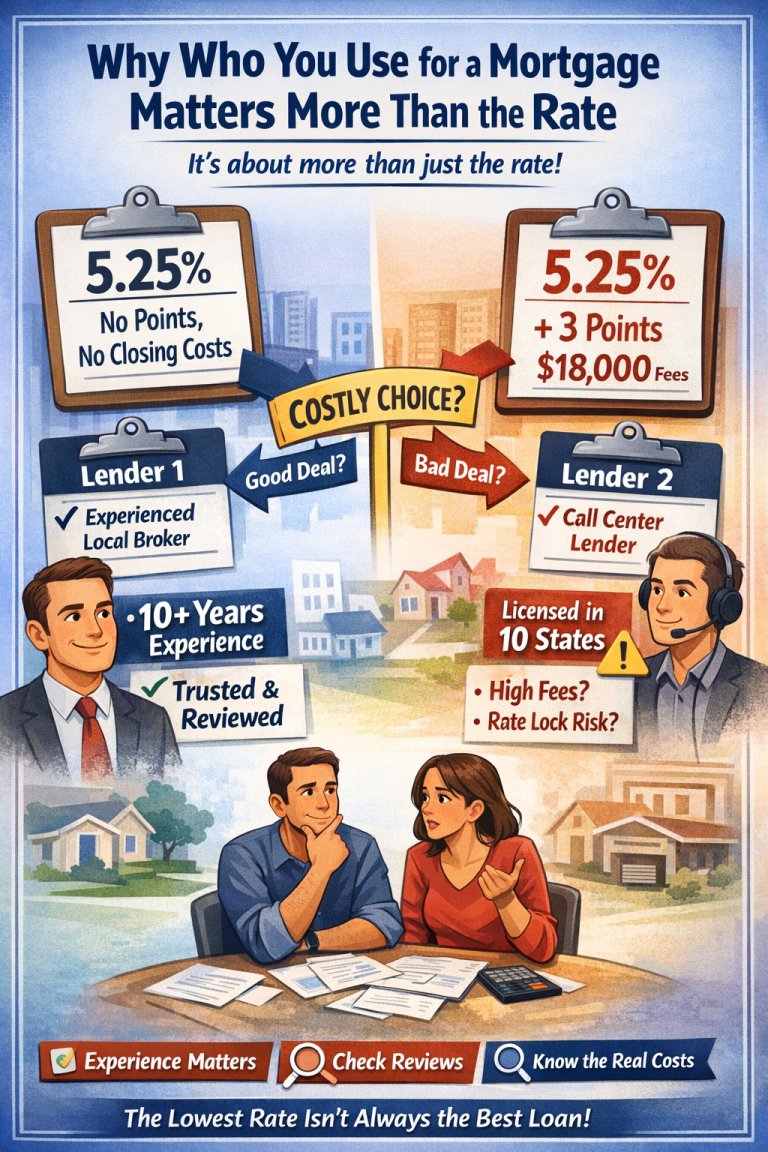
Why Who You Use for a Mortgage Matters More Than the Rate
Who you use for a mortgage loan matters. Let’s walk through a very real scenario…

On Hold or Just Unsure? Why You Wanted to Buy in the First Place
Every so often, someone gets pre-approved, looks at homes, runs numbers… and then says, “We’re…
View More from The Mortgage Files:
begin your mortgage journey with sonoma county mortgages
Let us make your mortgage experience easy. Trust our expertise to get you your best mortgage rate. Click below to start turning your home dreams into reality today!