
If you’re applying for a VA or FHA mortgage in a community property state—such as California, Arizona, Texas, or Washington—there are unique rules about how a spouse’s credit and income are treated. Understanding these rules can help you avoid surprises and plan your loan strategy with confidence.
Community Property Basics
In community property states, most assets and debts acquired during a marriage are considered jointly owned, even if only one spouse is applying for the mortgage. That means lenders must consider the total household financial picture, not just the borrower’s.
Credit Check on the Non-Borrowing Spouse
For both VA and FHA loans, the lender is required to pull the credit report of the non-borrowing spouse, even if that spouse is not listed on the mortgage. This is different from conventional loans, where only the borrower’s credit is typically reviewed.
- The non-borrowing spouse’s debts—like car loans, credit cards, or student loans—are included in the borrower’s debt-to-income (DTI) calculation.
- Any negative credit history, such as late payments or collections, can affect loan approval or terms.
Using the Spouse’s Income on VA Loans
Here’s where VA loans stand out. While the non-borrowing spouse’s credit must be checked, the VA allows the spouse’s income to be counted when calculating DTI—even if they are not on the loan. This can offset their debts and help keep the DTI ratio within acceptable limits.
Example: Suppose your spouse has a car payment that would normally raise your DTI. If your spouse earns income, that income can be added to the calculation, balancing out the debt. This flexibility can make qualifying for a VA loan easier when one partner has significant obligations. For more detailed guidance on VA loan requirements, visit Sonoma County Mortgages – VA Loans.
FHA Loans: Similar Credit Rules, Different Income Treatment
FHA loans also require the lender to review the non-borrowing spouse’s credit and include their debts in the DTI ratio. But unlike the VA, FHA guidelines do not allow you to use the spouse’s income unless they are on the loan. That means any debts in the spouse’s name count against the household DTI without the benefit of their income. To explore FHA financing options, see Sonoma County Mortgages – FHA Loans.
Planning Your Application
Before applying, gather a full picture of both partners’ finances:
- Obtain credit reports for both spouses and review them for accuracy.
- List all recurring debts—auto loans, credit cards, student loans—and determine how they affect your combined DTI.
- For VA loans, consider whether your spouse’s income can help offset their debts.
- For FHA loans, weigh whether adding your spouse to the mortgage might be necessary if their debts significantly impact DTI.
Strategies to Lower Debt Ratios
If the combined DTI is too high, you may need to:
- Pay down revolving debt like credit cards.
- Refinance or pay off car loans with high monthly payments.
- Explore increasing household income or adding the spouse as a co-borrower when allowed.
Why Understanding These Rules Matters
Failing to account for the non-borrowing spouse’s credit and debts can cause delays or even a loan denial late in the process. By understanding how VA and FHA treat community property states, you can structure your application for the best chance of approval.
Bottom Line
In community property states, VA and FHA lenders must look at both spouses’ credit—even when only one is applying. VA loans offer a key advantage: you can use the non-borrowing spouse’s income to offset their debts, potentially lowering your DTI and making qualification easier. FHA loans require the same credit review but don’t allow the spouse’s income unless they’re on the loan. Knowing these differences can help you plan your mortgage strategy and avoid surprises.
Looking to get a mortgage? Get a free rate quote now!
Share:
RELATED MORTGAGE ADVICE FROM SCOTT SHELDON
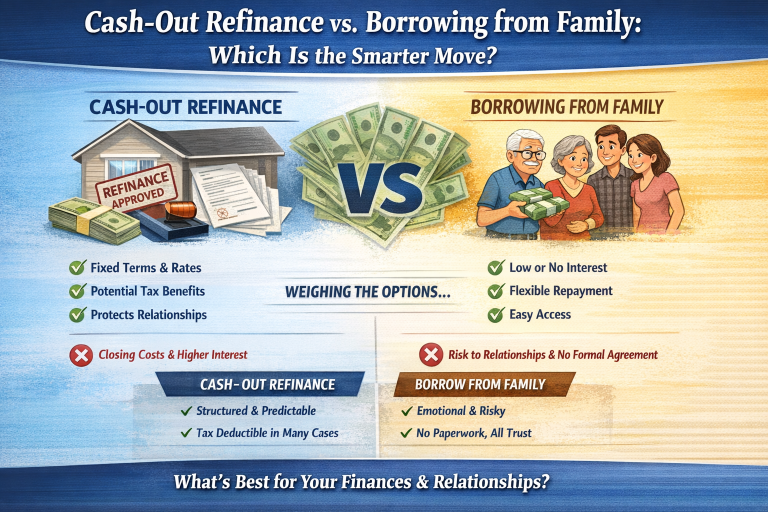
Cash-Out Refinance vs. Borrowing from Family: Which Is the Smarter Move?
You’ve built equity in your home. Maybe a lot of it. At the same time,…

Why Housing Inventory Still Feels Tight—And What Interest Rates Have to Do With It
Let’s start with a simple but powerful scenario. A homeowner locked in a mortgage at…
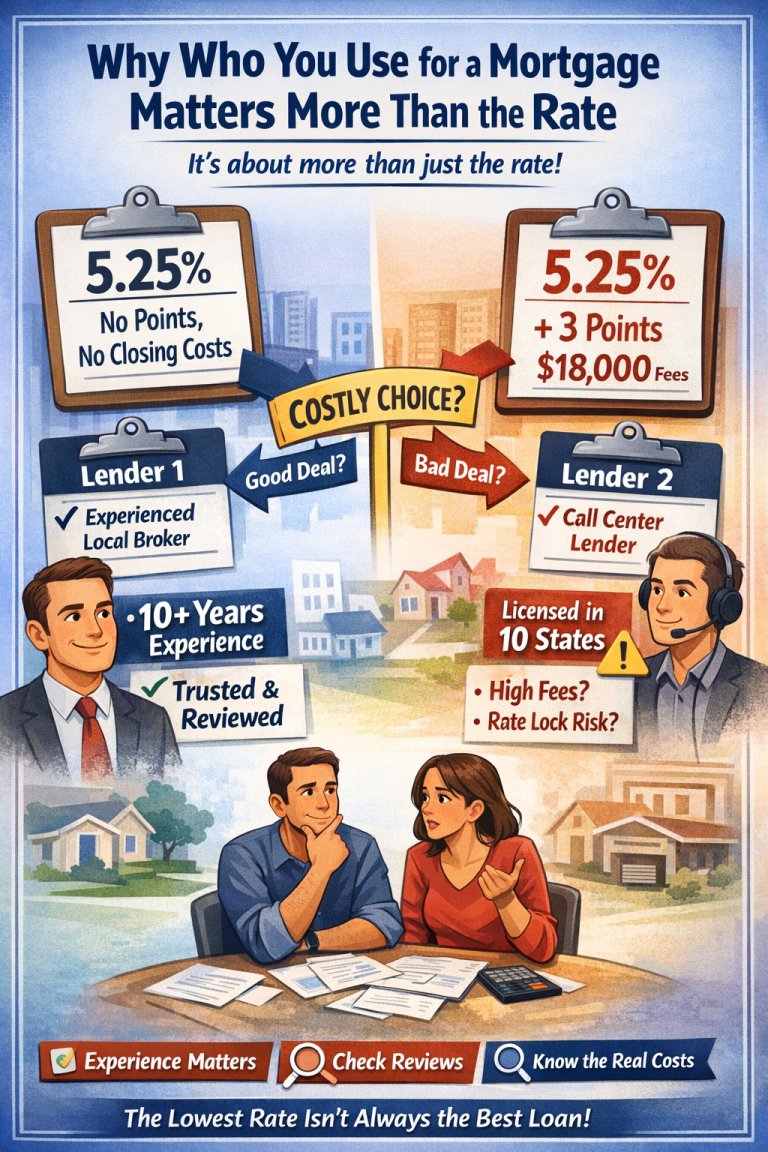
Why Who You Use for a Mortgage Matters More Than the Rate
Who you use for a mortgage loan matters. Let’s walk through a very real scenario…

On Hold or Just Unsure? Why You Wanted to Buy in the First Place
Every so often, someone gets pre-approved, looks at homes, runs numbers… and then says, “We’re…
View More from The Mortgage Files:
begin your mortgage journey with sonoma county mortgages
Let us make your mortgage experience easy. Trust our expertise to get you your best mortgage rate. Click below to start turning your home dreams into reality today!